Balloon Aortic Valvuloplasty as a Bridge to Planned Surgical Treatment of Lung Adenocarcinoma
DOI:
https://doi.org/10.48026/issn.26373297.2026.1.17.6Keywords:
balloon aortic valvuloplasty, aortic stenosis, lung adenocarcinoma, noncardiac surgery, CT angiographyAbstract
Introduction: Balloon aortic valvuloplasty (BAV) can temporarily relieve left ventricular outflow obstruction in selected patients with severe aortic stenosis who require time-sensitive noncardiac treatment. We describe its use in preparation for planned surgical treatment of lung cancer.
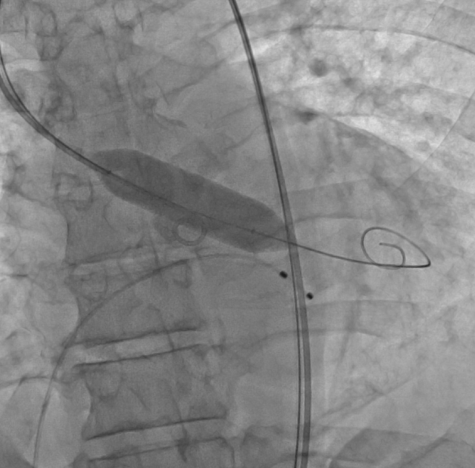
Case presentation: In a 66-year-old man, chest CT revealed a peripheral mass in the left upper lung lobe measuring 30 × 33 × 31 mm and extensive aortic valve calcification. Cytology was consistent with adenocarcinoma, and a multidisciplinary team recommended surgical treatment. Transthoracic echocardiography demonstrated severe aortic stenosis (valve area 0.7 cm²; mean gradient 45 mmHg), prompting postponement of thoracic surgery. Transfemoral BAV was performed using an 18 × 50 mm balloon with rapid ventricular pacing. Follow-up aortography showed no significant aortic regurgitation. Postprocedural echocardiography showed a valve area of 1.2 cm² and a mean gradient of 36 mmHg, interpreted in the report as moderate residual stenosis. Digital subtraction angiography demonstrated subtotal occlusion of the right common femoral artery; following CT angiography and conservative vascular management, no progression of ischemia was observed. On follow-up, the oncologic workup was continued.
Conclusion: In this case, BAV achieved short-term hemodynamic improvement and served as an interim step in preparation for reassessing the operability of the lung tumor. The procedure itself carries cardiovascular risks, and the decision regarding thoracic surgery requires renewed multidisciplinary assessment.
Downloads
Published
How to Cite
Issue
Section
License
Copyright (c) 2026 Haris Porobic, Mirad Hujdur, Džan Horozić, Darko Tomić, Armin Papračanin

This work is licensed under a Creative Commons Attribution 4.0 International License.
Copyright & licensing:
This journal provides immediate open access to its content under the Creative Commons CC BY 4.0 license. Authors who publish with this journal retain all copyrights and agree to the terms of the above-mentioned CC license.